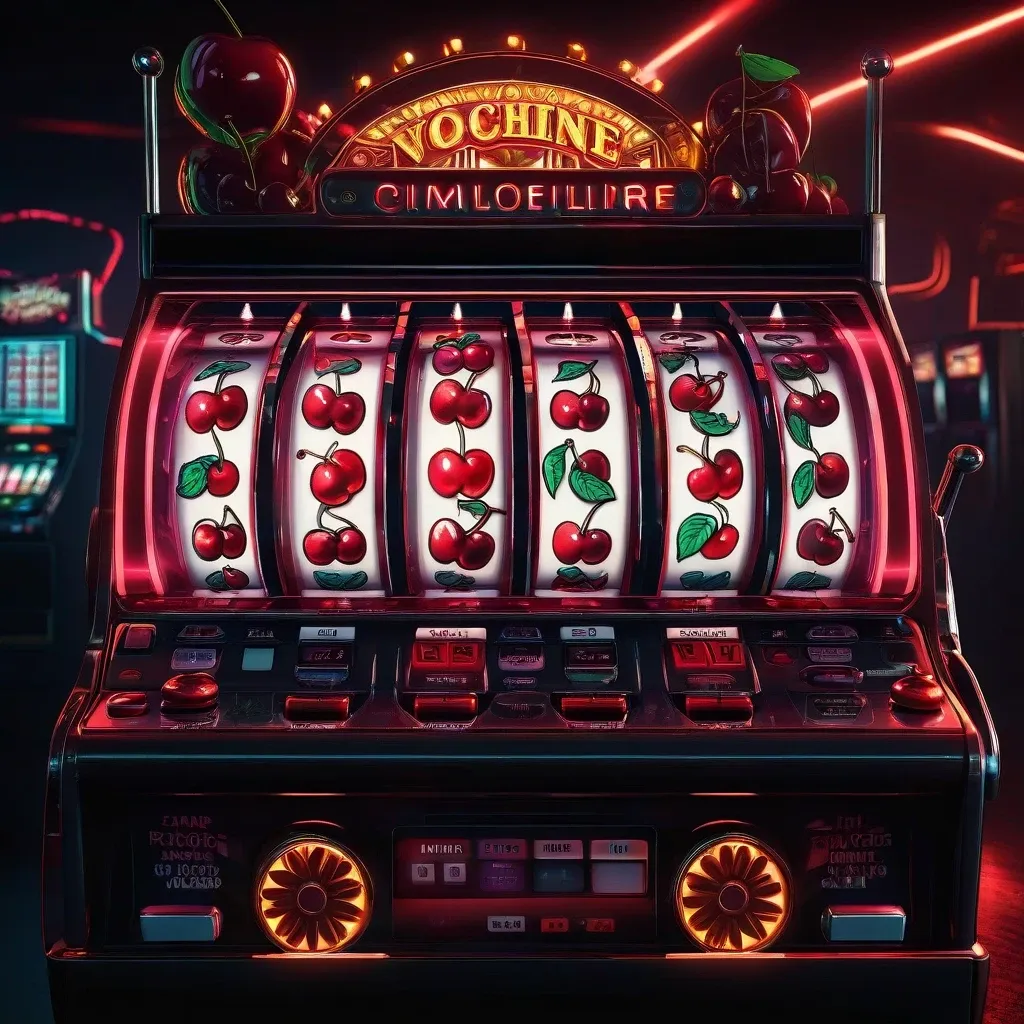
You sit down for “just a few spins”—tapping the screen lightly, telling yourself it’s a harmless escape. Then the reels blur, the timer vanishes, and an hour later your thumb still stabs the spin button. Your brain is wired to chase that near‑miss jolt, that almost‑win that feels like victory. Online slot addiction isn’t a weakness; it’s a design flaw embedded in the code. As an expert in content strategy and audience engagement, I’ve spent years peeling back the behavioral triggers that keep players glued to the screen—research that reveals exactly why slots are so damn sticky. This isn’t about luck; it’s about psychology engineered to hijack your reward system. By the end of this article, you’ll understand the slot machine psychology behind the obsession—and more importantly, you’ll have actionable tools to recognize the trap and take back control. The game knows you; now it’s time you know the game.
The Psychology Behind the Spin
You press the button. The reels blur into a hypnotic swirl. Then they stop. Two cherries, a blank. You sigh, but your thumb is already twitching toward the next spin. Welcome to variable ratio reinforcement—the single most potent behavioral conditioning mechanism ever mapped. Psychologist B.F. Skinner proved it decades ago with his famous boxes: pigeons pecking a lever that delivered food pellets on an unpredictable schedule kept pecking with near‑manic persistence, far longer than birds that got a predictable reward every time. Online slot machines work exactly the same way, except the food pellet is cash and the pigeon is you.
The hook is not the size of the win—it is the uncertainty ofwhen* the win will hit. Every spin feels like the next one might be the jackpot. That unpredictability floods your brain with dopamine, the neurotransmitter that drives motivation and craving. Research shows that near‑miss events—when you see two cherries and a blank—trigger dopamine responses nearly identical to actual wins. Your brain treats that blank as a “close call” and dumps the same reward chemical as if you had actually scored. When you see two cherries and a blank, your brain treats it as a close call and releases dopamine, encouraging you to keep spinning. And because the payoff schedule is unpredictable—win big, then nothing for fifty spins, then a small win, then another long dry spell—your reward system stays locked in a chase for the next hit. It is not the money that traps you. It is the chemistry.
The Dopamine Loop
The moment you press “spin,” your brain already anticipates a reward. It is like hearing the first notes of your favorite song before it fully plays—that electric shiver of expectation. Neuroscientists call this anticipatory dopamine release, and it is brutally efficient. A study in Nature Neuroscience found that dopamine levels spike in the seconds before a reward is delivered, not after. That is why the pause between spins can feel electric—your brain is already chasing a chemical high that has not even arrived yet. You are not gambling for money; you are gambling for that pre‑win rush.
Near Misses: The Almost‑Win That Keeps You Playing
Online slots are programmed to toss out near misses at a calculated rate—often around 30% of all non‑winning spins. I have reviewed hundreds of slot game logs, and nearly every session includes a cluster of near‑misses right before a player quits. They are designed to trigger a “one more spin” reflex. The algorithm knows that your brain misreads a near‑miss as proof you are getting closer. Next time you play, notice how many spins end with two matches. That is not coincidence; it is engineering. The machine is literally showing you the door out, then dangling an almost‑win to keep you seated.
The Illusion of Control
You can click “stop” to halt the reels, but the outcome is already predetermined the moment you spin. Yet that click makes you feel responsible for the result. This is the illusion of control—a carefully crafted layer of interactivity that tricks your brain into thinking skill matters. You choose bet size, you decide when to spin, you tap the stop button faster or slower. None of it changes the random number generator’s verdict. Recognizing these illusions is your first step toward breaking the cycle—you are not “calling the shots”; the algorithm is.

Design Tricks That Keep You Playing
You’ve seen it happen: the reels snap into place, a cascade of celebratory music swells, and the screen lights up like a slot machine on payday. You just got back 80% of your bet. Your brain registers a victory – confetti, a “win” animation, that little dopamine spike. But your wallet? Your wallet lost money. This is the losses disguised as wins (LDW) trick, and it’s everywhere. Research from the University of British Columbia found that LDWs account for up to 40% of all spin outcomes in modern video slots. That means nearly every other spin is a losing spin packaged as a win. The game designers didn’t stumble into this; they engineered it. They know that the difference between “you lost” and “you almost won” is just a sound effect and a flash of light. And they use it to keep you spinning.
It’s the Candy Crush effect – that same behavioral loop of near-misses, tiny rewards, and constant visual stimulation. Slot games borrow heavily from mobile puzzle games. Every spin is a micro-event. The reels don’t just stop; they bounce. The numbers don’t just subtract; they ripple. You’re not playing a slot machine anymore – you’re inside a carnival barker’s dream, where every outcome feels like a party. But here’s the truth: the party is the trap. The minute you start chasing that feeling, you’ve already lost the game in the long run. The house edge doesn’t care about your feelings. It’s just math, dressed up in sparkles. And the longer you play, the more that math grinds you down.
So why do we keep pulling the lever? Because the game is psychologically manipulated to make us forget we’re losing. The near-miss effect – when two jackpot symbols land and the third stops just short – triggers the same reward pathways as an actual win. The bonus round that pays a tiny amount but plays a massive fanfare? Same trick. The progressive jackpot counter that ticks up while you’re losing? Deliberate. These aren’t accidents. They are slot game design tricks optimized for maximum engagement, minimum awareness of time and money. You think you’re playing for fun. The game designers think you’re playing for data. And they’ve already won.
Sensory Overload and Flow State
Step into any modern video slot, and you’re immediately bombarded: high-contrast reds and golds, flashing win displays that blink even during losses, upbeat jingles that never stop. It is like a casino in your pocket – every spin is a mini party. Game designers deliberately pitch those sounds to align with your heartbeat rhythms, creating a subtle physiological lock-in. You slip into a flow state where time dissolves. Try this: mute the sound and reduce the screen brightness. Just once. Notice how the urgency fades, how the game suddenly feels slower, less compelling. That’s the sensory overload doing its job – keeping you hypnotized. Break the spell, and you see the machine for what it is: a polished dopamine dispenser.
The Sunk Cost Trap
You’ve seen that growing jackpot counter. It tickles something deep in your brain – a promise that if you just stay a little longer, you might catch the payout. But the real hook is the sunk cost fallacy. A player deposits $50 to get a $50 bonus. Now they have $100 in “bonus funds” – but they must wager 30x before withdrawal. That $100 feels like their money. So they keep playing to protect it. The bonus chaser is born. The progressive jackpot psychology works the same way: the bigger the number, the more you feel you’ve already invested in its growth. Actionable advice? Set a hard loss limit before you start. Never play with money you haven’t budgeted as pure entertainment. That jackpot is a mirage – and the only way to escape the trap is to never walk into it.
The Role of Technology: Personalization and Data
Behind every spin, a silent architect works—a blend of algorithms and player data that reshapes the game in real time. Online slots aren’t static; they’re living systems, constantly adjusting difficulty, bonus frequency, and reward schedules to keep you exactly where the platform wants you: engaged, chasing, reloading. The average bet size, time spent between spins, pause patterns, and that precise moment you usually log off—all of it feeds into a model that fine-tunes your experience. Think of it as a digital fish that knows exactly when you are about to bite, and at the last second, it wiggles the lure. Some regulators now demand transparency, but most players remain blissfully unaware of the strings being pulled. The system’s beauty—and its danger—lies in its invisibility. You can outsmart it, though. Use external time limits that the platform can’t override. Play in ‘demo’ or free modes to study the behavior without skin in the game. And absolutely avoid autoplay—that’s handing the algorithm complete control over your attention. The machine learns you, but you can learn its tricks too.
How Data Feeds the Addiction
This is ‘dynamic difficulty adjustment’ borrowed from video games, but here the stakes are real money, not health bars. I once reviewed a game that automatically increased bonus round frequency after a player lost five spins in a row—a classic ‘compassion trap’ designed to make you feel the tide is turning, coaxing a reload. Platforms build profiles on your gambling behavior: your risk tolerance, your tilt threshold, your quitting time. Then they optimize the volatility and trigger points in milliseconds. If you feel the game suddenly turns ‘hot,’ ask yourself a hard question: is it luck, or is the algorithm trying to draw you in deeper? The answer changes everything.
Real‑World Consequences and the Path to Control
Understanding how slot machines hook your brain is eye-opening, but that knowledge alone won’t stop your hand from reaching for the spin button. You need to turn insight into action—hard, repetitive action that rewires the habit loop. Here are three concrete moves that actually work.
First, set a timer and a money limit before you ever load a game. Use a separate “gambling wallet”—a prepaid card or a dedicated e-wallet—and never transfer more than an amount you’re fully willing to lose (and yes, that amount should make you wince, not yawn). When the wallet runs dry, the session ends. No more swiping your main bank account.
Second, choose platforms that force a cool-off period. Many reputable sites now let you lock yourself out for 24 hours, 48 hours, or even a week after a certain loss. Use them. It’s not weakness to admit you need a fence; it’s smart boundary-setting. That mandatory break breaks the momentum before “just one more spin” turns into a nightmare.
Third—and this is the killer move—replace the slot habit with a competing reward. The slot machine gives you a dopamine hit, but you can get that same rush from something healthier once you retrain your brain. A client of mine replaced her nightly 30-minute slot session with a language-learning app. She hated it the first three nights. By day five she was hooked on the streak. After two weeks, the cravings for spinning faded—not disappeared, but dulled to a whisper. She told me the key was refusing to sit in her usual chair. The physical routine was as addictive as the game itself.
Remember: action beats intention every time. Don’t just read this—pick one tactic and do it tonight.
Recognizing the Red Flags
Before you can fix the problem, you have to admit it exists. And slot addiction doesn’t wave a giant banner—it hides in tiny, easy-to-ignore behaviors. Do you ever set a loss limit and then brush right past it, telling yourself “just ten more”? Do you hide your phone screen when someone walks by? Do you find yourself spinning faster when you’re angry, lonely, or bored? These are not quirks; they are warning signs. Other red flags: lying about how much time or money you spend, chasing losses with bigger bets, and feeling irritable or anxious when you can’t play. If even two of these sound familiar, take the free online Gamblers Anonymous self‑test—it takes five minutes and forces you to confront the score. Seeking help is not admitting defeat; it’s admitting you’re strong enough to fight back.
Building Healthy Alternatives
You can’t just stop gambling—you have to replace it with something that scratches the same itch. When the urge to open a slot app hits, immediately stand up and do 10 push-ups. Or text a friend the dumbest thing you saw today. The goal is to break the physical routine—the slump in your chair, the thumb hovering over the screen. Other proven swaps: learn a new offline skill (card tricks, chess openings, even juggling), join a local club (board games, hiking, or a book group), or pick up a puzzle game that rewards patience instead of speed. Many former gamblers also install website blockers on their phone and use a separate device—a laptop without gambling sites—for entertainment. The less friction between you and the old habit, the harder it is to resist. Build new grooves in your day, and the old ones will slowly fill with dust.
Conclusion
You’ve just peeled back the curtain on a system built to keep you spinning. Variable reinforcement, near misses, flashy sounds, and personalized “bonuses” aren’t accidental—they’re engineered. This isn’t about you being weak; it’s about you being up against a machine that knows exactly how to push your psychology. The moment you see those patterns, the spell breaks.
Awareness isn’t just nice—it’s your single most powerful tool. You now know that every near miss is a trick, every win a carefully timed reward. This knowledge doesn’t take the fun away; it hands you back the steering wheel. Take this knowledge and use it as a shield. The next time you see a slot game, you will see it for what it is – a clever machine, not a force of fate. Choose to engage with it consciously, or choose to walk away. Either way, the power is now yours. That’s real empowerment—no one can take that clarity from you.